
FD 2 holds Medical Research Committee and Medical Research Council annual reports catalogued by date. A report can establish what the organization publicly recorded for a particular year, but it is not a complete archive of experiments, named participants, laboratory notebooks or the later effectiveness of an intervention. This guide gives a precise source route, identifies what the archive can and cannot show, and names the independent documents needed before a personal or geographic conclusion becomes defensible.
Start With the Report Year, Not a Person Search
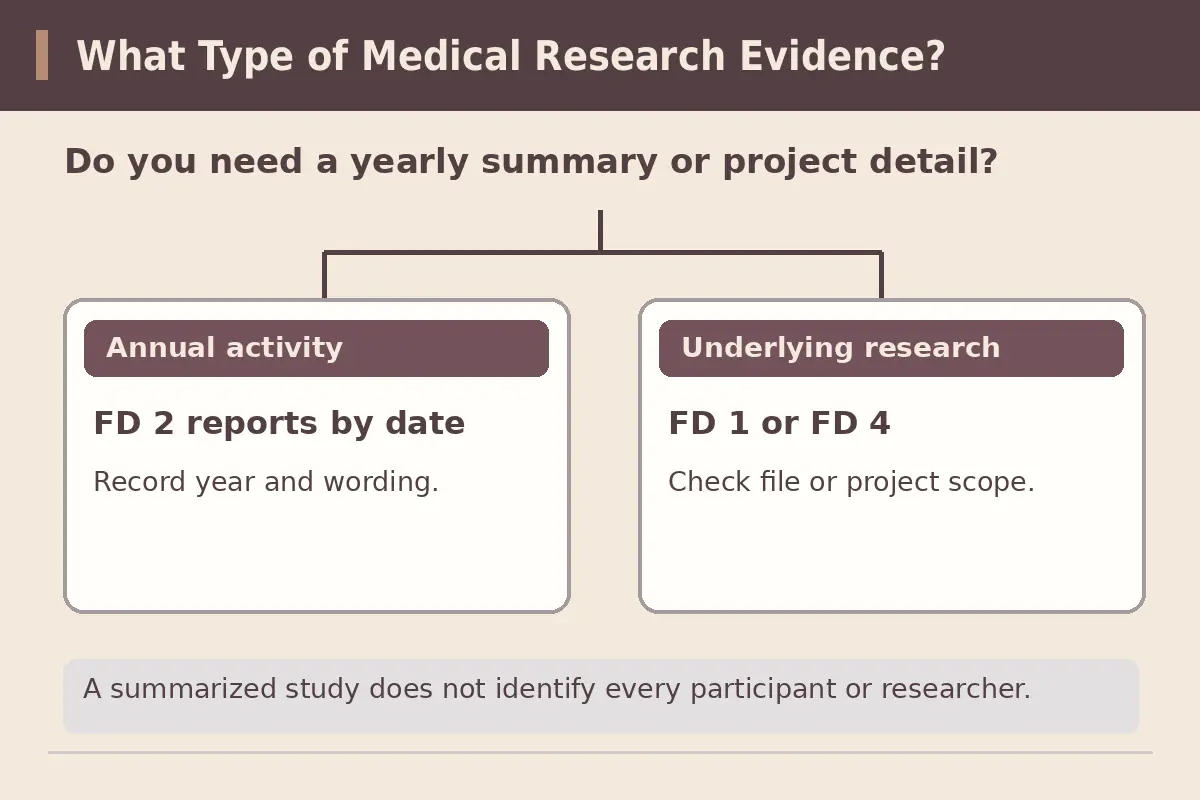
An annual scientific report is best approached by date and topic. The National Archives twentieth-century public-health guide places the Medical Research Committee and Medical Research Council among records prefixed FD and specifically says that FD 2 annual reports are catalogued by date. Begin with an approximate year, an institutionally described research subject and any published title known from a letter or bibliography. A surname-only search may miss a report that summarizes a whole project without naming all assistants or investigators.
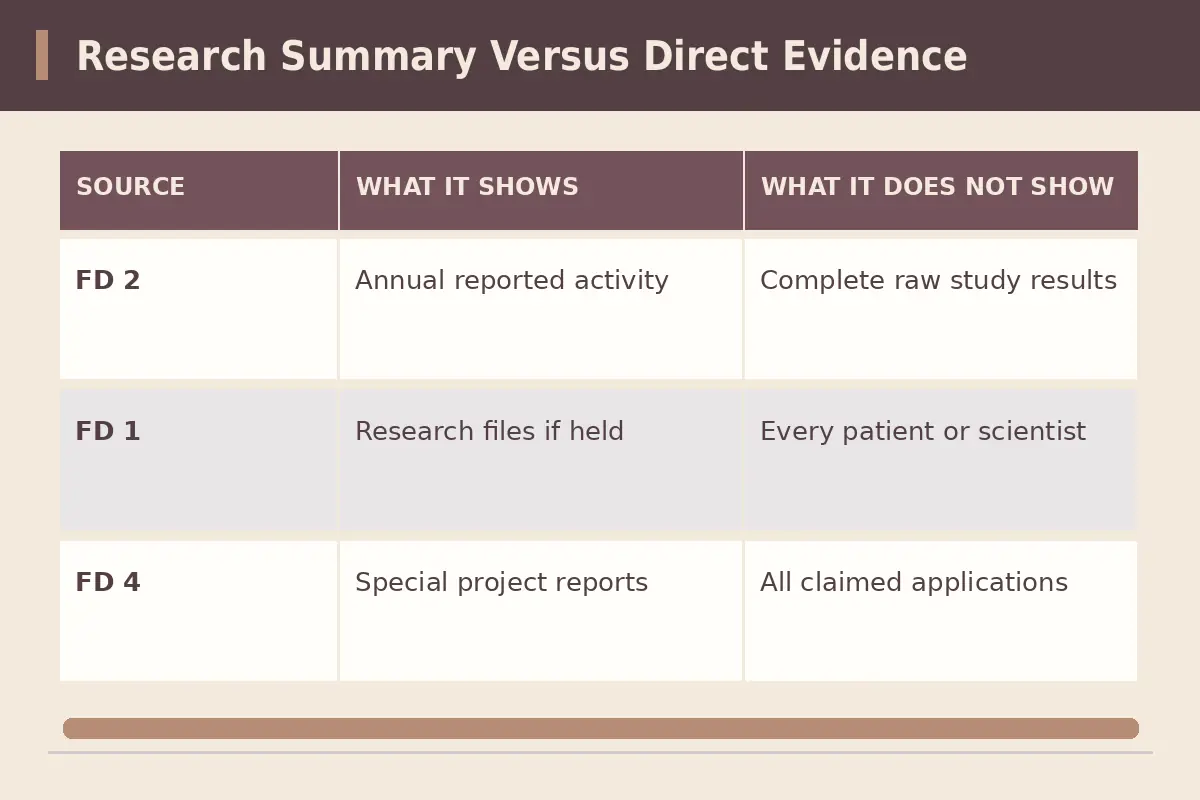
The National Archives historical accessions guide distinguishes FD 2 annual reports from research files in FD 1 and special project reports in FD 4. This is a crucial scope distinction. A retrospective annual summary answers what the organization chose to report, whereas a scientific project file may contain more detailed correspondence or supporting material if it survives. A household story that “grandfather worked on an MRC investigation” requires person-level evidence; the annual report alone might not provide it.
Find the Exact FD 2 Edition and Describe It
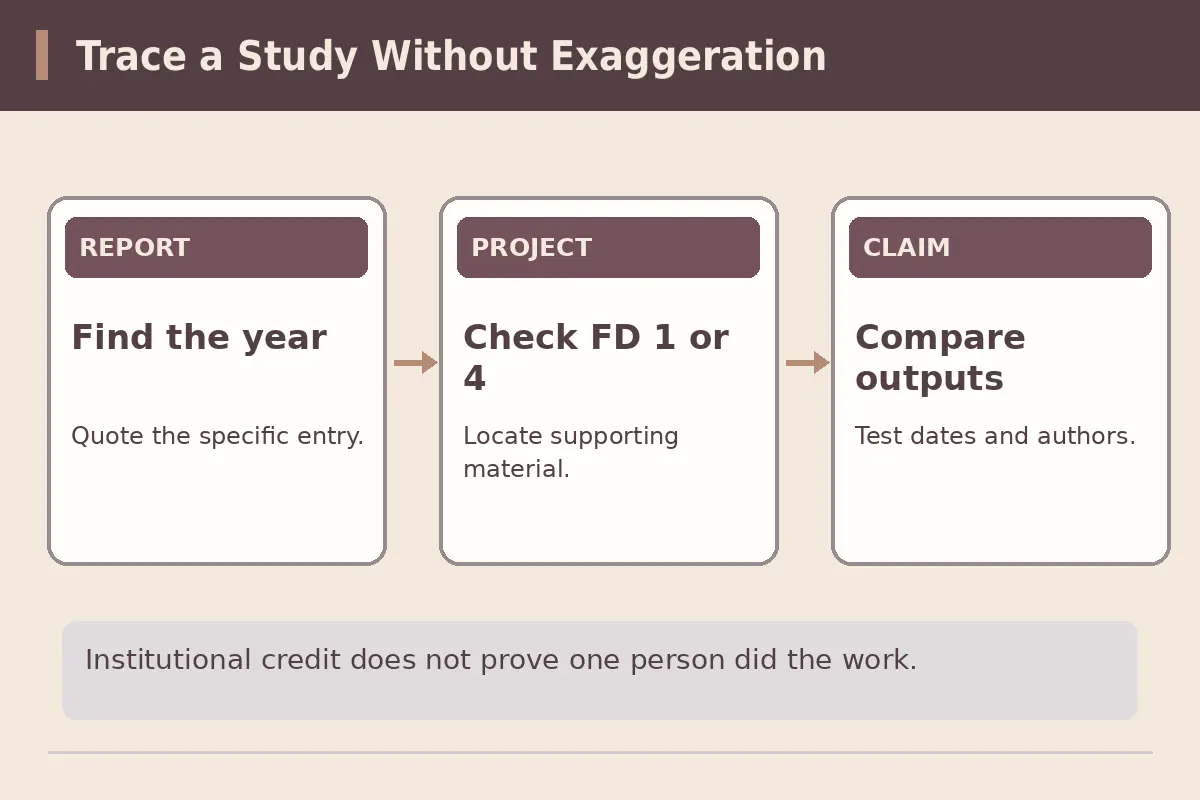
Use Discovery to browse FD 2 by date and inspect individual catalogue descriptions. Record the report title, reporting period, publication or volume date if supplied, full reference and the repository’s access information. Do not substitute the date of a catalogue page’s creation for the historical reporting year. Reports for adjacent years may summarize the same project at different stages, and a result mentioned in one year could reflect work initiated earlier. Quote the printed report’s own time frame before building a chronological argument.
When you inspect a volume, check its contents list, section headings, authorship statements, appendices and bibliographic notes. An index heading such as “industrial health” does not identify an individual patient or a complete experimental method. If the report refers to another publication, trace that citation rather than deriving numerical findings from a short prose paragraph. Record whether a statement is a project proposal, work in progress, a result being reported by the council, or an account of a later application.
Before drawing a date-specific conclusion, compare the reporting year with the publication year shown on the title page. A project may be summarized after its most active phase. Leave the date field as a range if the wording supports only a range. If the report names several laboratories, preserve each site rather than treating the institution as one building. Administrative terms can change between editions, so search historical synonyms before interpreting a missing keyword as the end of a program.
Distinguish Institutional Reporting From Scientific Proof
An annual report can be reliable evidence that an official organization represented a particular program as under way. It cannot, by itself, guarantee every technical claim in the program was independently verified. The report may condense methods, select positive outcomes, or use terminology later replaced by different scientific standards. Distinguish the organization’s historical claims from modern consensus and do not use an archival description to give treatment advice. Your historical question is what was reported and by whom, not whether a past treatment is medically appropriate today.
Create a claim audit: “the annual report stated this investigation existed,” “the report summarized this finding,” and “the result changed clinical practice” are three different propositions. The third usually requires contemporary policy documents, published studies, professional guidance and dated implementation evidence. If the report names a laboratory, that does not establish that every worker there conducted the research. If it credits a researcher, it need not list their assistants or research participants. Preserve attribution as printed and investigate conflicting credits without flattening them.
Move From FD 2 to FD 1 or FD 4 Only When Relevant
The National Archives accession lists identify FD 1 as research council files and FD 4 as reports of special research projects. Treat these as alternative avenues to explore, not inevitable next volumes in a single chronological sequence. Search FD 1 when correspondence, funding or institutional administration is the main issue; consider FD 4 when a specific special project report is the target. Verify whether the document actually exists, its coverage and any access restrictions before promising that it contains the experiment described in FD 2.
A topic can be described differently in annual reports and detailed research material. Record alternative historical names, organization names and keywords, then cross-reference genuine project identifiers, contributors and dates. A printed article can provide methodological context but may be a different output from the council’s administrative papers. Keep the author’s manuscript, official annual account and later journal publication as separate sources in your evidence ledger. A mismatch could be a change in terminology or a distinct project rather than a transcription error.
Build an Evidence-Based History of a Research Program
For a hypothetical case, a family remembers a relative “working on research into fatigue” during the interwar period. An FD 2 annual report that mentions fatigue research would support the institutional context of such work, not the person’s involvement. The accession guides also describe Industrial Fatigue Board reports in FD 3, which may be useful for identifying the correct program. Cross-check independently dated employment letters, institutional personnel records, published contributor lists or professional registers before attributing an experiment to the person.
Publish results with a report-year table containing the verbatim claim, page or section, exact archive reference, related research series and what remains unproved. Label modern interpretations separately. Do not turn a report’s general statement about a hospital or region into a diagnosis of a named ancestor. If an item cannot be accessed, cite it explicitly as a catalogue lead, not as though you had read the original. Such disciplined reporting allows later researchers to evaluate what the historical institution said and what corroboration remains outstanding.
A modern retelling may compress institutional sponsorship, scientific authorship and patient outcomes into a single heroic story. Use three columns instead: who funded or administered the research, who is credited in the original, and what data document the result. FD 2 has a clear role in the first two questions only to the extent the annual report actually states them. Later published papers and personnel records may support more detailed attribution.
More Research Method Guides
How We Research This Archive Series
This guide starts with the official description in The National Archives’ research guidance, not a claim that we have inspected a particular person’s private file or a specific original piece. The archival statements here concern the series or research method. A hypothetical example is labelled as such; it is not a newly discovered historical event. We use the Discovery search guidance to distinguish keyword matches from archive holdings and document contents, because catalogue descriptions do not transcribe every word of an original.
For every real candidate, record its historical place or person’s name, the creator, document type, date, full FD 2 piece or item reference, access restrictions, and the exact claim being tested. The official citation guide explains how to document those references so another researcher can retrace them. An unread document remains a catalogue lead, never proof of imagined details. If a record is missing, preserve the searched terms and dates and examine survival and alternate custodians before interpreting the gap.
Before sharing a conclusion, audit the difference between original source wording and your interpretation. Require independent evidence for any further claim about an individual, property owner, legal effect, or completed action. Respect archival access limits and living people’s privacy. This website also provides an affiliate disclosure; no paid partnership or commercial access is implied by these archival references.
It contains Medical Research Committee and Medical Research Council annual reports, catalogued by date.
Do not assume so. Annual reports summarize work; inspect research files and published studies for detailed evidence.
Related but distinct archive series for research files and special project reports, respectively.
Only if the specific report states relevant person-level facts; independent employment or authorship evidence is usually needed.
No. These records are historical evidence; use current qualified clinical guidance for medical decisions.