
ADM 207 contains Fleet Air Arm squadron diaries covering 1939–1957, according to The National Archives’ Fleet Air Arm personnel guide. Browse by squadron number, then match the dates to an aircraft, posting or reported event. These diaries can sometimes name individuals, but they are not complete nominal rolls or substitutes for personal service records. A squadron operation proves a unit-level activity; individual presence requires a second line of evidence.
Start With the Correct Naval Air Organization
The Fleet Air Arm served the Royal Navy and followed a changing administrative history. RAF and naval aviation series can overlap in subject, but that does not make their catalogue references interchangeable. The National Archives states that Fleet Air Arm diaries for 1939–1957 are in ADM 207 and recommends searching by squadron number. Write down the wartime number, unit name, ship or station and date before selecting a reference.
A squadron may operate from a carrier, shore station or several locations during one period. A family reference to ‘the Navy flying unit’ does not supply an exact squadron identification. Compare an aircraft serial, unit badge, dated letter or appointment before choosing a diary. Where a unit transferred or was redesignated, treat the records on either side as potentially separate until a documented link connects them.
Locate a Diary and Check the Reporting Date
Search the ADM 207 hierarchy in Discovery using the squadron number and a date range. A catalogue description may cover a long period while the surviving diary has a shorter run or missing pages. Check the actual heading, reporting period and any attachments before citing a particular event. An entry compiled later than the operation must be dated both as a report and as an account of the earlier occurrence.
The National Archives cautions that diaries sometimes mention people by name. A squadron that reports many flights may name a commanding officer but omit most ratings and ground staff. A roster in one month is not proof that the same list held for a later month. Build an evidence ledger with unit, exact date, location, aircraft, event and names explicitly recorded; leave remaining personnel unknown.

Read Squadron Activities Without Inventing Flights
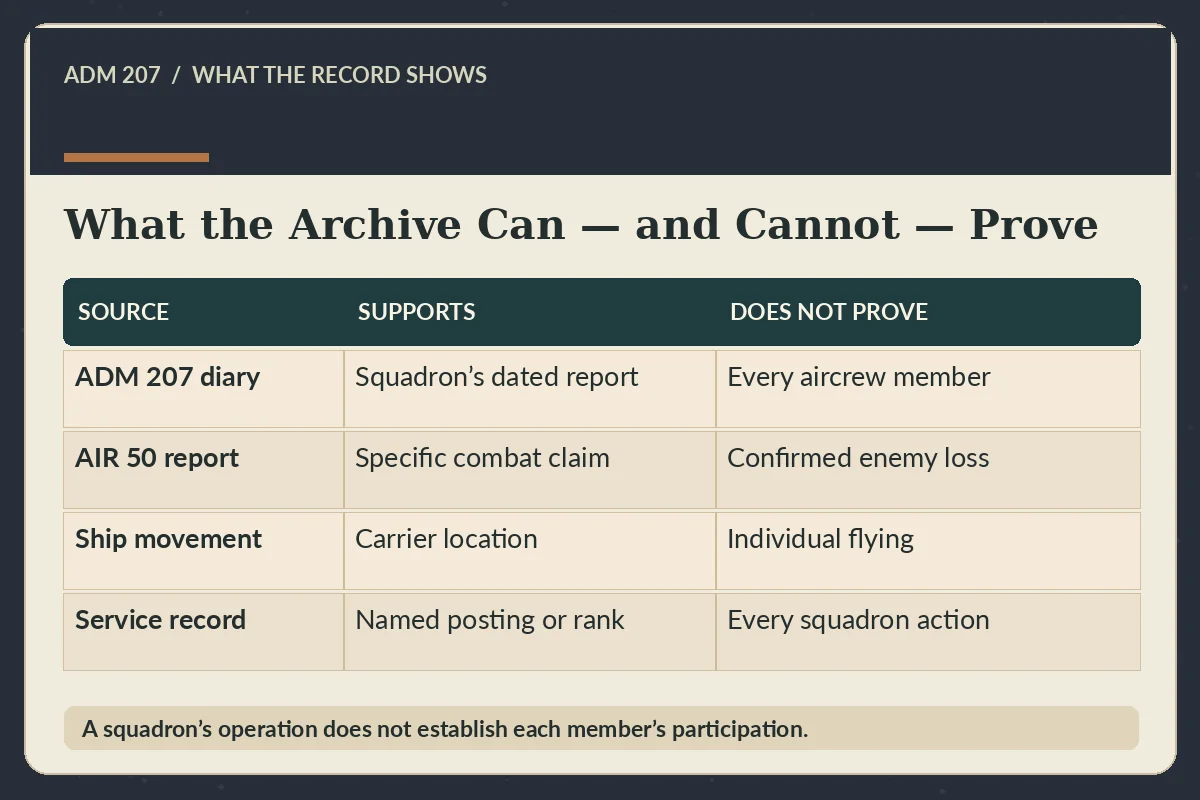
A diary can document patrols, training, exercises, moves or encounters, often at varying levels of detail. It may refer to the squadron’s operational status rather than list every sortie. A statement that a squadron was aboard a carrier does not demonstrate that each aircrew member flew from it on a particular day. Match the nature of the event to the actual words written by the compiler.
Separate planned operations from completed ones. An order to fly, a daily summary and a later result report are not interchangeable. If a diary records an aircraft loss, it may not settle the cause or identify everyone involved. For named casualties, check relevant casualty, award and individual service evidence. Do not infer death, survival or heroism from one operational sentence.
Follow Ships and Shore Bases Independently
Fleet Air Arm aircraft operated amid overlapping shipboard and land-based administration. If a squadron diary places activity in a particular area, cross-check the carrier or shore facility using a suitable ship log, movement source or base record. The National Archives notes that ship logs are mainly navigational and only incidentally operational, so they do not automatically verify every squadron action.
A carrier’s location is context, not proof that a specific pilot was aboard or flew that day. Even aircraft assignments can vary as planes are transferred or repaired. Record the aircraft identity, squadron report and carrier record in separate lines, noting any disagreements. A useful chronology includes unknown intervals and temporary detachments rather than joining two sightings into an uninterrupted deployment.
Distinguish Awards, Combat Reports and Diaries
The RAF operations guidance points to AIR 50 combat reports alongside naval aviation material. Such reports focus on particular claims and participants, whereas an ADM 207 diary gives a broader squadron account. A combat claim, a squadron narrative and an official award announcement have different evidential purposes. Match them only when date, aircraft, unit and named personnel clearly align.
If an aircrew member’s name appears in a combat report but not a diary, do not treat the omission as evidence of a false report. Conversely, a diary mention of a successful attack does not independently confirm the claimed damage to an opposing vessel or aircraft. Seek external records where available, and label the origin of each estimate. Avoid converting an attributed operational claim into an established enemy loss.
Reconstruct One Squadron Month Carefully
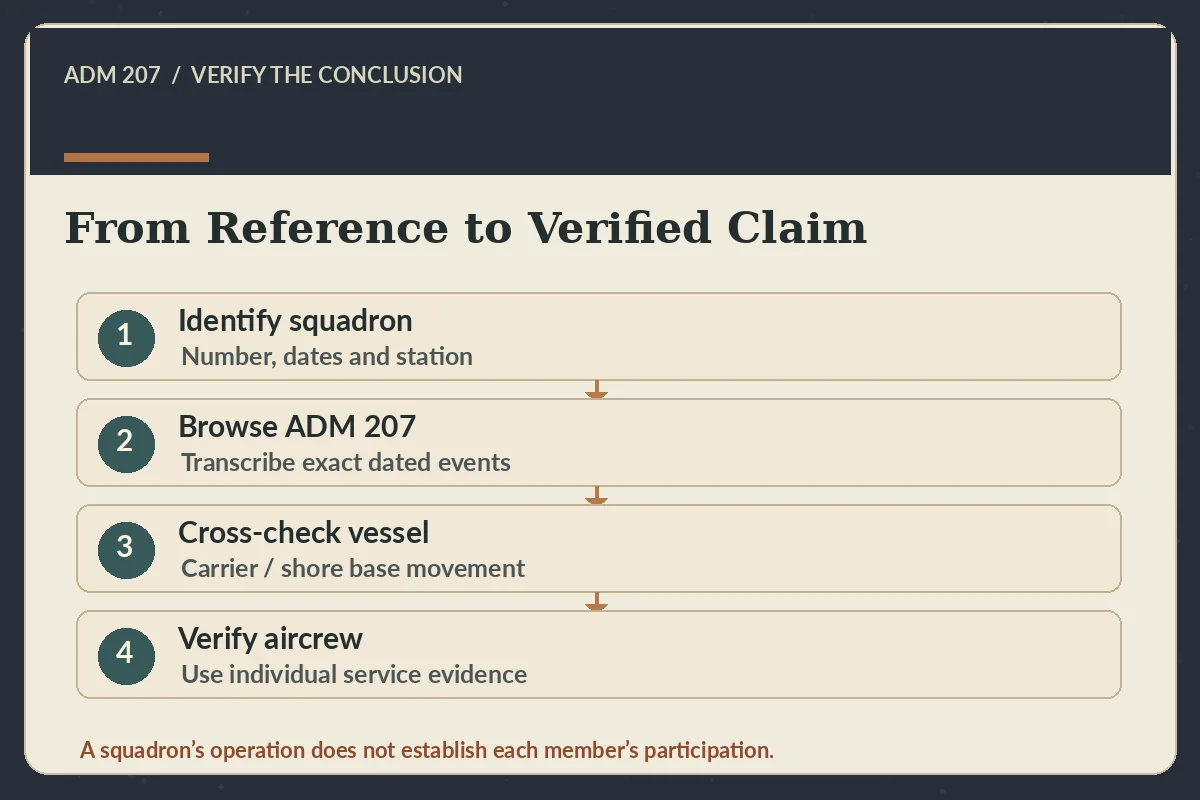
Suppose a family letter mentions a Fleet Air Arm squadron serving on a carrier in 1944. Begin with the squadron number and browse ADM 207 for that month. Transcribe dated entries rather than quoting only a convenient summary. Compare a ship movement record for location and any named posting or service document for the aircrew member. The overlap of dates may support a plausible context without proving every personal assertion.
Keep three dates separate: a diary event, an individual’s documented posting and a ship’s recorded position. If these align, explain what that alignment supports. If one is absent, mark the gap. Personal letters can provide strong clues, but they need dating and provenance; a letter headed from a ship may have been written during a temporary stay rather than a permanent assignment.
Preserve Gaps and Personal Privacy Limits
A missing name is normal in unit diaries and not negative proof of service. A missing diary volume may reflect incomplete survival or limited cataloguing. Search contemporary unit numbers and alternate designations; do not assume a failed surname search exhausts the series. The National Archives specifically directs researchers needing personal service records to other custodians and sources appropriate to the individual and period.
When writing a history of a pilot, rating or mechanic, distinguish official operational records, later memoirs and family recollections. Treat each as a source with a date and author. A good conclusion is bounded: ‘ADM 207 confirms the squadron reported this operation; this person’s involvement remains to be verified’. That statement lets a reader continue the investigation without inheriting an invented biography.
More Records and Archives Guides
How We Research Sources and Boundaries of Proof
Our research method starts with the official subject guide and compares it with a second archival source. We record the holding archive, series, piece, document date, compiler and whether the document itself was inspected. A catalogue description is a lead, never a substitute for reading the original. We distinguish an administrative statement from a later event and a plausible interpretation from independent confirmation. Not every person, date or place can be proved from a surviving record; damaged, missing or unindexed items are noted explicitly. For information about our commercial relationships, review the affiliate disclosure.
The National Archives identifies squadron diaries for 1939–1957.
Use the historic squadron number and date range in Discovery.
No. Diaries sometimes name individuals but are not complete personnel lists.
No. A ship’s movement and an individual sortie require separate evidence.
Use relevant individual service records and other named dated sources; check current access guidance.