
Use the New Reel-Based NARA Search Route
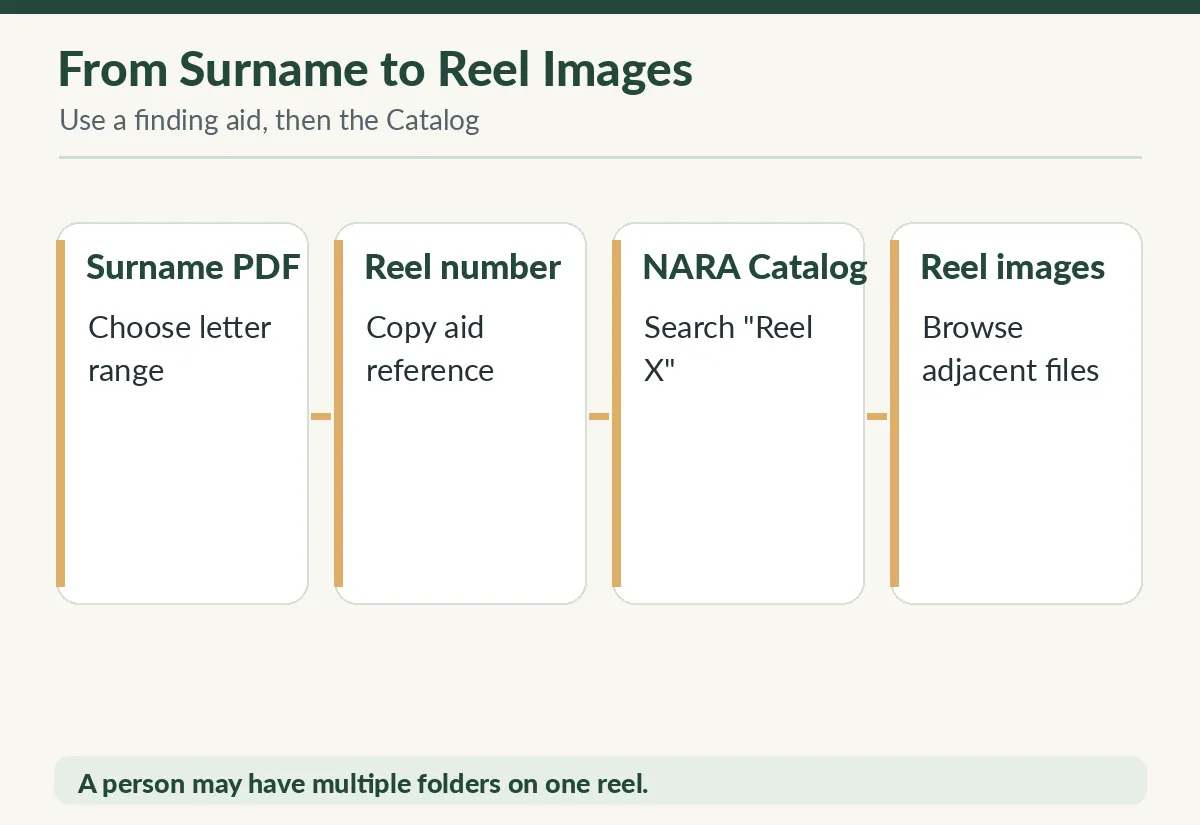
To find a Civilian Conservation Corps enrollee personnel file, start with the National Archives at St. Louis surname-range finding aids, identify its microfilm reel and search that reel in the NARA Catalog. The official illustrated instructions explain a route that is more precise than entering a common surname into a broad search engine. Files within the reel are alphabetically arranged, and an enrollee can have more than one file.
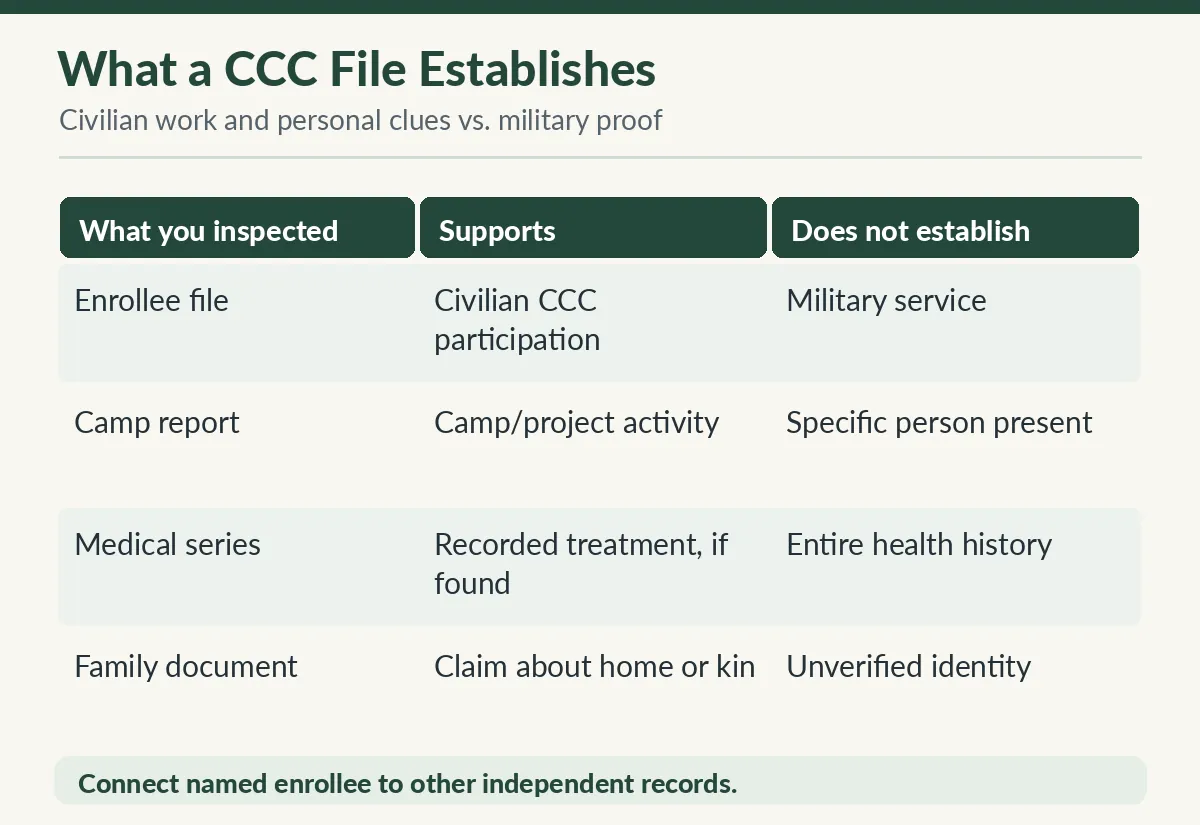
The CCC employed people for conservation, training and public projects. NARA states that beginning in May 1940 it also undertook defense work on military reservations and forest protection. These personnel files are civilian program records, not a shortcut to proving an army or navy career. Distinguish a man’s time in a CCC company from separately established armed-forces service, even when the work location was a military reservation. The archive offers digitized selections and a path to request individual records that are not currently visible online.
Find the Alphabetical Range and Quoted Reel Number
Open the Archives finding-aid page and locate the letter group containing the historical surname. It provides PDFs for ranges such as A–E, F–J, K–O, P–T and U–Z, subdivided into narrower files. Scan the correct PDF to identify the reel number beside the alphabetical segment. The example “Reel 4148” in NARA’s instructions illustrates Catalog syntax, not a universal reel for any family. Preserve the exact range and the reel number you actually read.
Next open the linked Catalog series titled “Individual Records (Enrollees).” Search within that series for a quoted string such as “Reel 4148,” substituting the actual reel number. A series-restricted search is essential: a broad keyword search may return unrelated project photographs, camp reports and newspaper descriptions. Open the file unit for the reel, then browse the images in alphabetical order until you reach the surname. Checking nearby spellings and the images immediately after the first file helps catch additional folders.
Review Every Relevant Personnel Image
NARA describes a viewer with numbered images under Show Details. Choose the pages belonging to the person and download individual page images from the image viewer; the download operation is page-based, not proof that a one-click bulk file exists. Note where one enrollee’s file ends and the next begins. Record the image number or other durable identifier so another researcher can find the same page. The reel is an access container; it is not a unique personal record number.
Extract names, home address, birth details, CCC company, dates or positions only where the viewed form actually states them. Different enrollees may have different surviving paperwork. A parent name written on an application is a reported relationship that should be checked against birth or household records. A transfer or departure date should be kept separate from a reported residence date. A missing page may represent an incomplete file, not evidence that the person never performed the recorded work.

Find Missing Files and Separate Clinical Records
The St. Louis access guide explains that a systematic digitization project changed roll access during scanning and that images are added online on a rolling basis. If you cannot find the file on the Catalog, NARA asks researchers to contact the St. Louis archival team, report the negative Catalog search and seek additional assistance. A missing result could mean a different surname spelling, incomplete digitization, or another agency’s file.
NARA also states that CCC medical and clinical records were created and stored separately from the enrollee file series. Those records are not included in the digitized reel set, and a separate archival search and possible digitization charge may be needed. Do not represent a medical file as part of the standard personnel PDF, or assume it exists for a particular person. Treat requests involving recent personal or clinical data with appropriate privacy care and use the custodian’s official access process.
Prepare a Focused Search or Copy Request
For a record request, the National Archives recommends the full name as used during CCC service, any known nicknames, birth date and place, home city and state at enlistment, parents’ names, service dates, company number, camp location and positions. These are aids to identification, not fields you should invent to complete a form. A request may fail when too little identifying information is known, especially for common surnames. Quote the reel and actual image data if you already saw a candidate.
The Archives identifies NA Form 14136 as a request option and explains that complete copies can incur fees, with invoices after locating records. Verify the current amount and instructions directly with NARA before sending payment; no third-party website can promise that a specific folder is complete. If you only need a service date or company number, explain the research question in a written request. The program’s camp-operation records form another evidence stream if a personal file is unavailable.
More Records and Archives Guides
How We Research CCC Service Claims
We use the NARA reel-finding page to separate finding-aid information from personally viewed pages, and the St. Louis holdings guidance to establish what a record request entails. Each proposed enrollee match gets an evidence sheet listing historical name, birth details, home residence, company or camp and the specific reel image that reported the item. We check neighboring folders for multiple files instead of stopping at the first likely surname.
The resulting conclusion distinguishes confirmed participation in a civilian program from a hypothesis about later armed-forces service, and separates a personnel record from independently held medical or project records. We do not invent CCC company numbers or attach sensitive records to living people. Our affiliate disclosure describes the website’s commercial policy, while the archives cited here remain the primary custodians for these claims.
No. NARA says a selection is digitized and more material is being added as part of a systematic project; use the published reel aids and current access instructions.
Locate the surname range in the National Archives finding-aid PDFs and use its reel number to search within the Individual Records (Enrollees) series, quoting a term such as “Reel 4148”.
Yes. NARA instructs researchers to check nearby images and files on the alphabetically arranged reel for additional folders under that person’s name.
No. NARA explains that medical and clinical records were separately kept and are not in the digitized enrollee reel series.
No. The CCC was a civilian conservation and employment program. Defense-related assignments from May 1940 do not themselves establish armed-forces service.