
C 67 is the supplementary Patent Rolls series, not a complete index to every royal grant or to the actions that followed one. According to The National Archives, some common-form patents were separately enrolled here, including letters of protection, pardons, passes for ships, and commissions of bankruptcy. Begin with the type of legal instrument suggested by the family story. A claim that someone “received royal protection” is a different archival problem from a claim that a ship sailed or that a debt was discharged.
Choose an instrument before searching a name
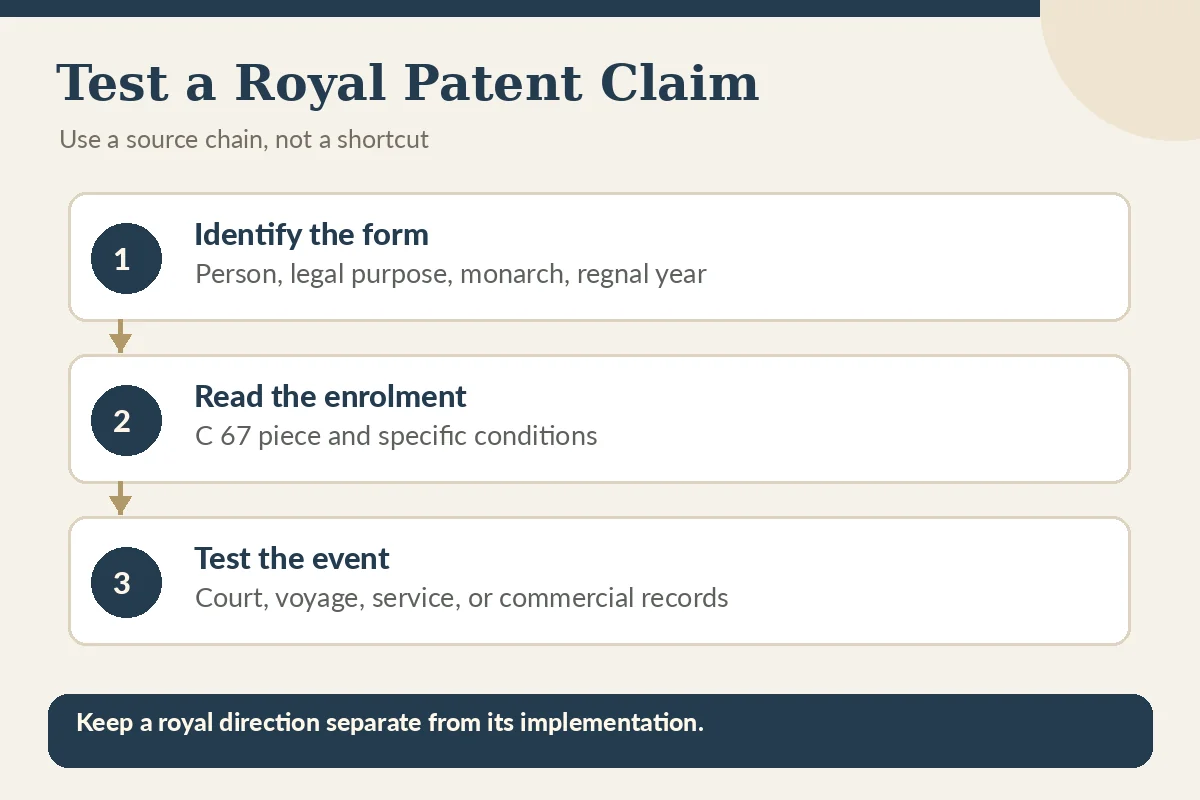
First identify the sovereign, approximate date, locality, and legal matter. Protect the distinction between the instrument’s issue date and the event it was meant to affect. An order granting a pass may have been issued in advance of an intended departure, and the intention recorded in a pass cannot replace a log or port entry. Likewise, a pardon may have defined an eligible person or act without establishing the complete prior prosecution. Keep the exact words of the document at the center of the search.
Separate C 67 from neighboring Chancery rolls
The primary Patent Rolls in C 66 contain many royal letters patent from 1201 onward. C 56 contains separate Confirmation Rolls for grants confirmed between 1483 and 1625. C 67 is supplementary and may have been used for selected routine forms rather than for every instrument of that type. A modern secondary account that vaguely refers to “patent rolls” is not specific enough to tell the reader where to look. Use the royal-grants guide to choose between these archival categories.
For pre-modern Chancery evidence, identify the regnal year rather than relying only on a modern calendar year. The same regnal year can cross 1 January, and parts of a roll can be stored as separate pieces. The foreign-affairs guide explains the regnal-year-to-piece process for related enrolments. Do not automatically transfer a C 66 calendar reference to C 67; browse the actual series description and its arrangement before requesting the manuscript.

Read the enrolled words and the person’s role
An enrolled letter may name the grantee, official receiving instructions, ship or master, petitioner, or party whose acts were to be pardoned. Those roles have different legal meanings. Transcribe the whole passage around each individual, noting whether the name is subject, beneficiary, witness, issuer, or simply an individual mentioned in a clause. Distinguish the formulaic text common to many royal instruments from case-specific facts that might support identification of an ancestor.
The date and wording are especially important for protection letters and passes. A period of protection can be limited, conditional, or attached to travel or service; its presence should not be turned into a definite itinerary. A ship pass may identify a vessel but not everyone aboard it. A commission of bankruptcy is a formal step in a legal process rather than proof that all creditors were compensated. Summarize the direct legal effect described in the record, then list the subsequent event that a separate source would need to establish.

Check the calendar against the original
Published calendars and printed indexes can be helpful for related rolls, but not every supplementary entry has the same level of indexing or published description. Record how you found the lead: catalogue keyword, regnal year, printed summary, secondary bibliography, or cross-reference from a legal case. If the catalogue offers only a broad piece description, do not claim to have found a named person until you have inspected the actual enrolment or a reliable transcription tied to it.
When examining the manuscript or authorized reproduction, note the piece reference, membrane or folio when appropriate, original spelling, corrections, and any endorsement. The date a clerk enrolled an instrument may differ from the date of the underlying royal authorization. If a calendar omits qualifiers—such as conditions, duration, or a geographical restriction—the fuller text controls the interpretation. State whether you have consulted an original, a modern catalogue description, or a historical calendar; they are not interchangeable citations.
Follow the act into independent records
The next source depends on the claim. A vessel’s actual voyage may be checked against port or naval records; a legal pardon may lead to court proceedings; protection associated with service may need payment or muster evidence; a bankruptcy commission may require creditor and court documentation. Avoid one generic chain that implies these distinct government instruments always generated the same supporting series. The ability to identify the right follow-up record depends on the century, jurisdiction, office, and what the royal text actually directed.
Build a research ledger with columns for instrument type, addressee, issue date, enrolment reference, condition stated, and independent proof sought. An entry showing that a document was issued directly establishes an official act of enrolment; it cannot by itself establish obedience, a journey, employment, a conviction, or family relationship. If no follow-up survives, make that limitation explicit. This protects readers from treating an impressive royal seal or formula as a verified narrative of someone’s life.
Consider a hypothetical royal pass allowing a merchant vessel to proceed to a named destination. Its enrolment would support a statement about the permission granted, and might identify the master or a described ship. It would not establish that weather, war, debt, or a later official decision allowed the voyage to occur. A separate port entry or contemporary ship record is needed. The same logic applies to a pardon: state the clause of authority and its conditions, then separately investigate the legal proceedings and any later use of the pardon.
More Records and Archives Guides
How We Research Supplementary Patent Rolls
We choose between C 66, C 56, and C 67 by instrument type before searching broad names or places. For C 67, we follow the official series arrangement and reconstruct the historical date with care. We record both modern catalogue references and manuscript locators, and we preserve conditional language in the grant. Readers should be able to reproduce the route from an initial lead to the original enrolment.
Our final conclusion is deliberately narrow: the Crown enrolled an instrument described in a specified way on or around a specified date. A larger claim—such as travel actually undertaken or a court judgment overturned—must cite the independent event record. Details of our editorial link practices appear in the GenHis affiliate disclosure.
C 66 contains the main Patent Rolls; C 67 contains selected supplementary enrolments of routine instrument types.
No. It documents permission or authority, not necessarily a completed voyage.
No. The terms and scope of the instrument may require examination of separate legal proceedings.
It dates an act by a monarch’s years of reign and may need conversion to a catalogue piece and roll part.
A calendar is a finding and summary aid; consult the enrolled wording for conditions and exact named roles.